The working archive / page 3
Blog
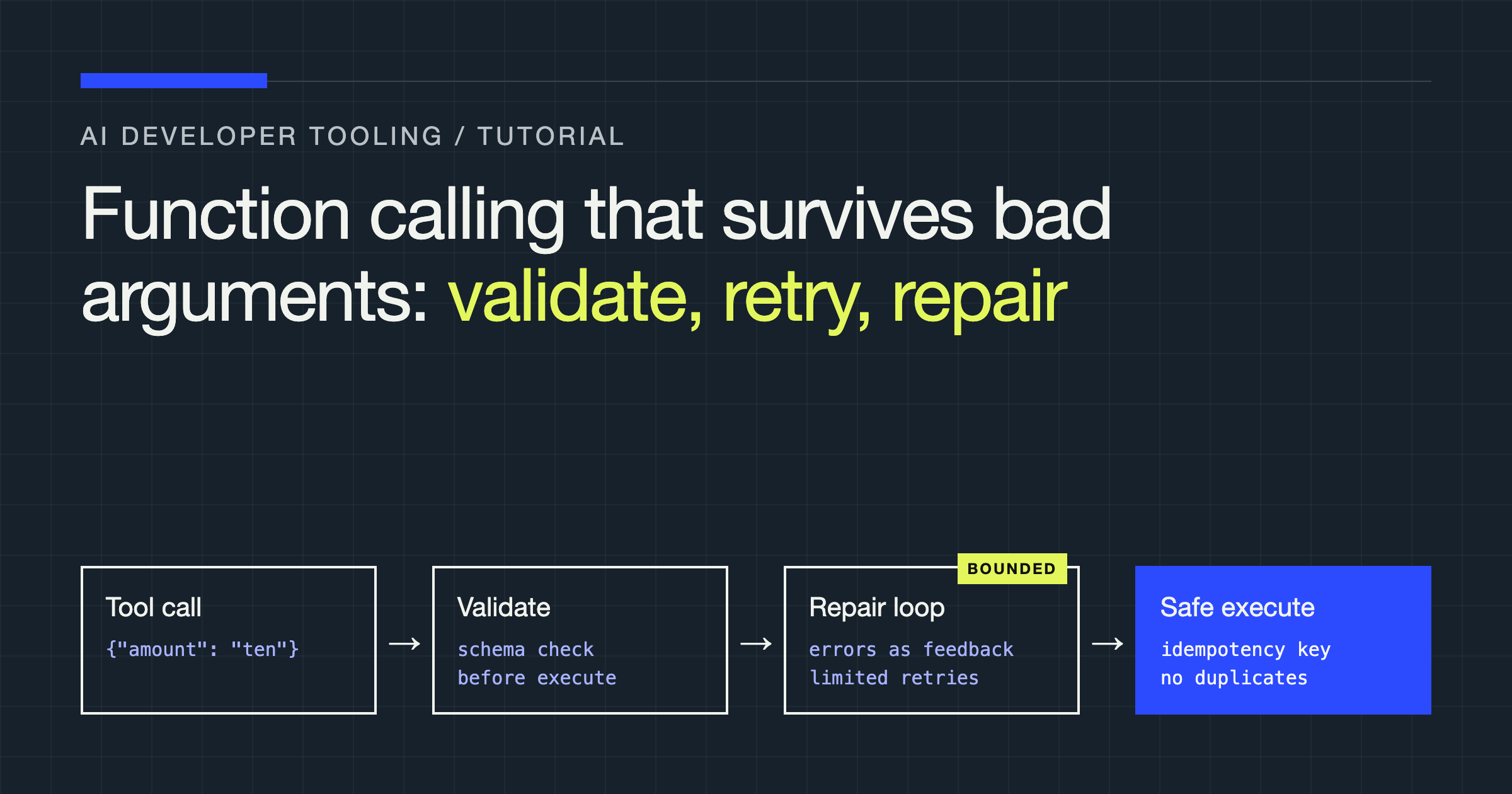
Function Calling That Survives Bad Arguments: Validation, Retries, and Repair
Build a validation, retry, and repair layer for LLM function calling that rejects bad arguments, returns useful errors, and protects side effects.
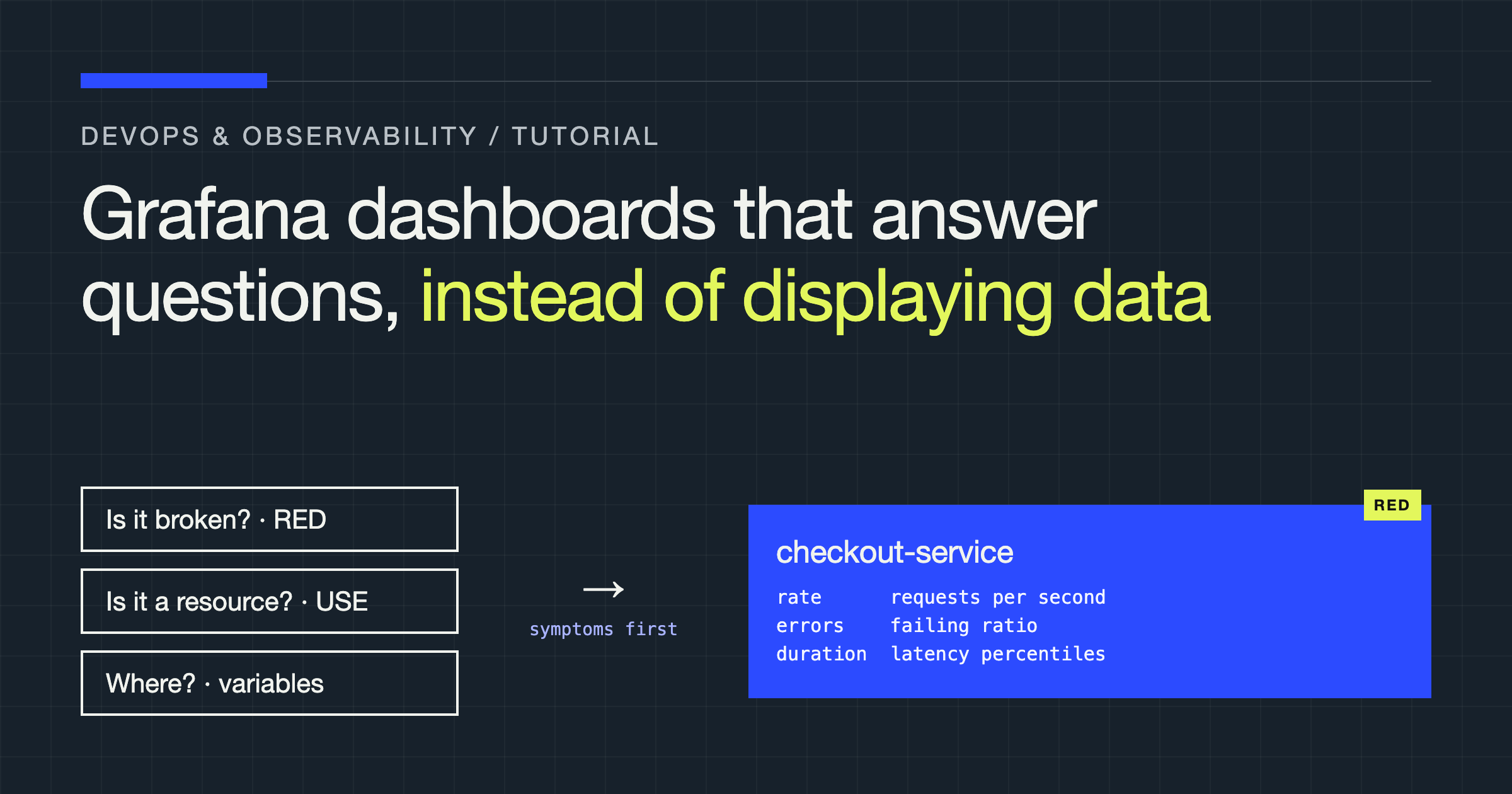
Grafana Dashboards That Answer Questions Instead of Displaying Data
Design Grafana dashboards around the questions operators actually ask: symptom-first layout, RED and USE panels, honest thresholds, and variables that narrow scope.
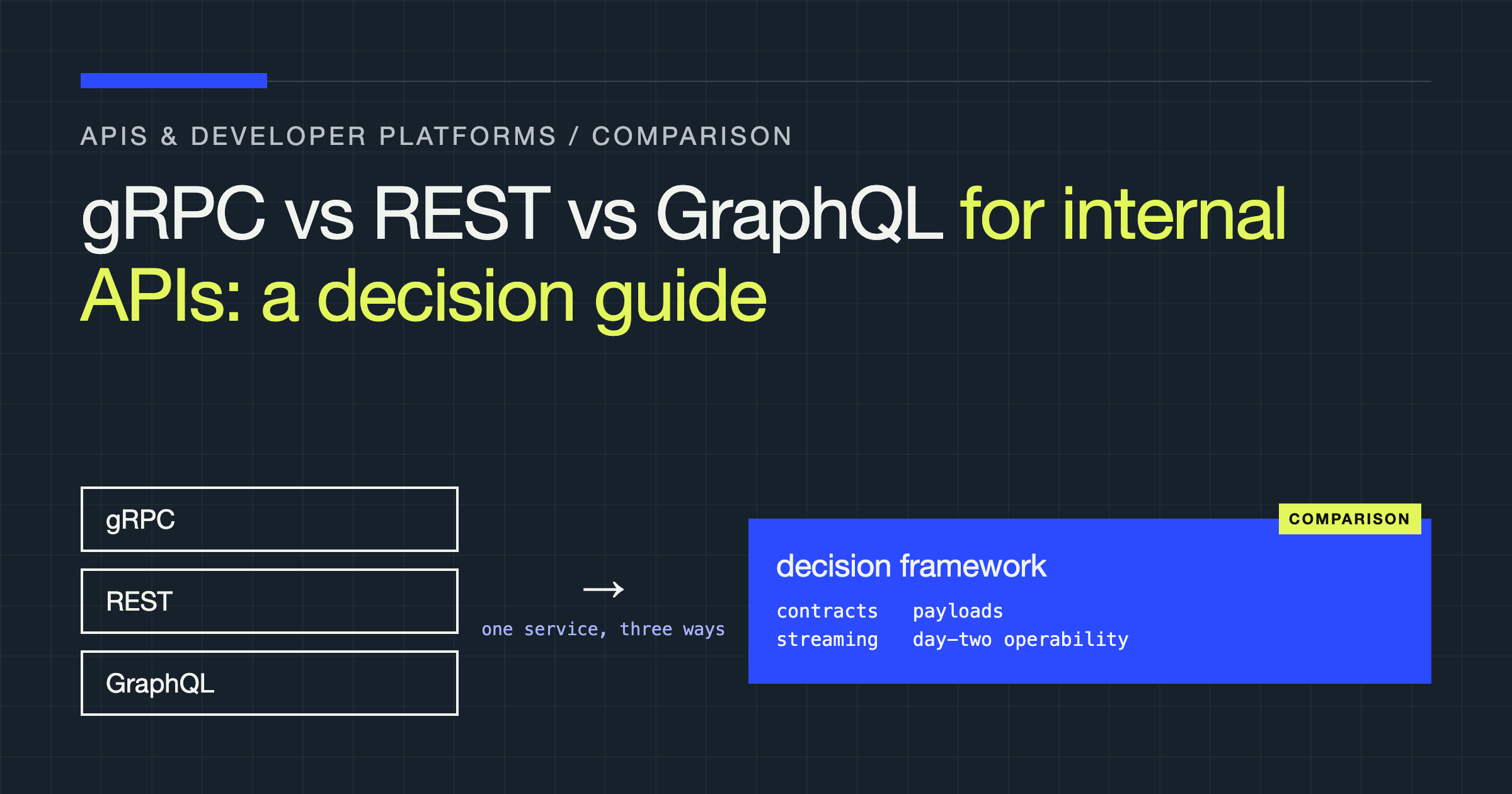
gRPC vs REST vs GraphQL for Internal APIs: A Decision Guide with Working Examples
The same internal service built three ways: compare gRPC, REST, and GraphQL on contracts, payloads, streaming, and operability, then decide with a framework you can reuse.
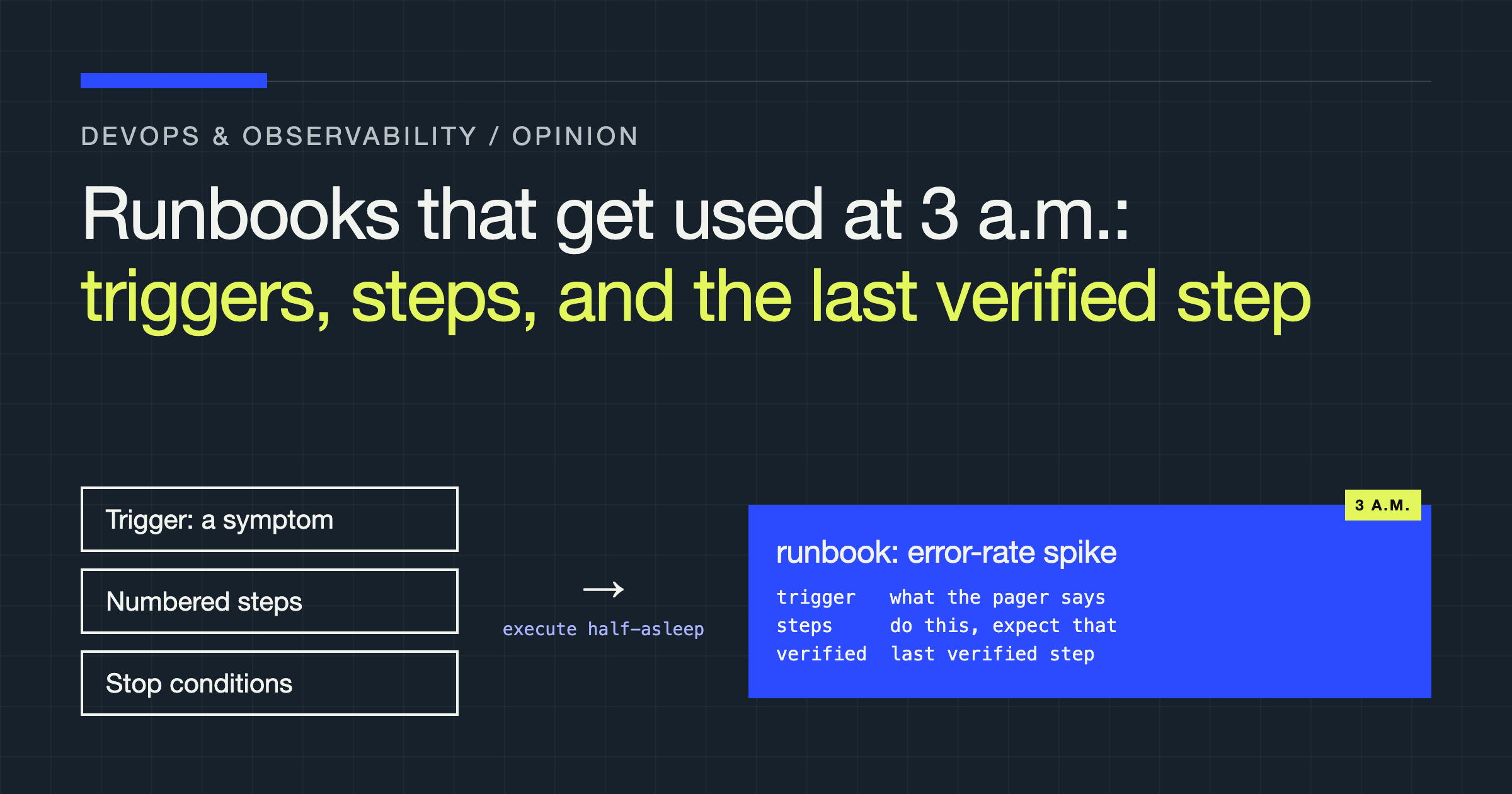
Runbooks That Get Used at 3 a.m.: Structure, Triggers, and the Last Verified Step
Write runbooks an exhausted engineer can execute at 3 a.m.: symptom-based triggers, numbered verifiable steps, explicit stop conditions, and a maintenance loop.
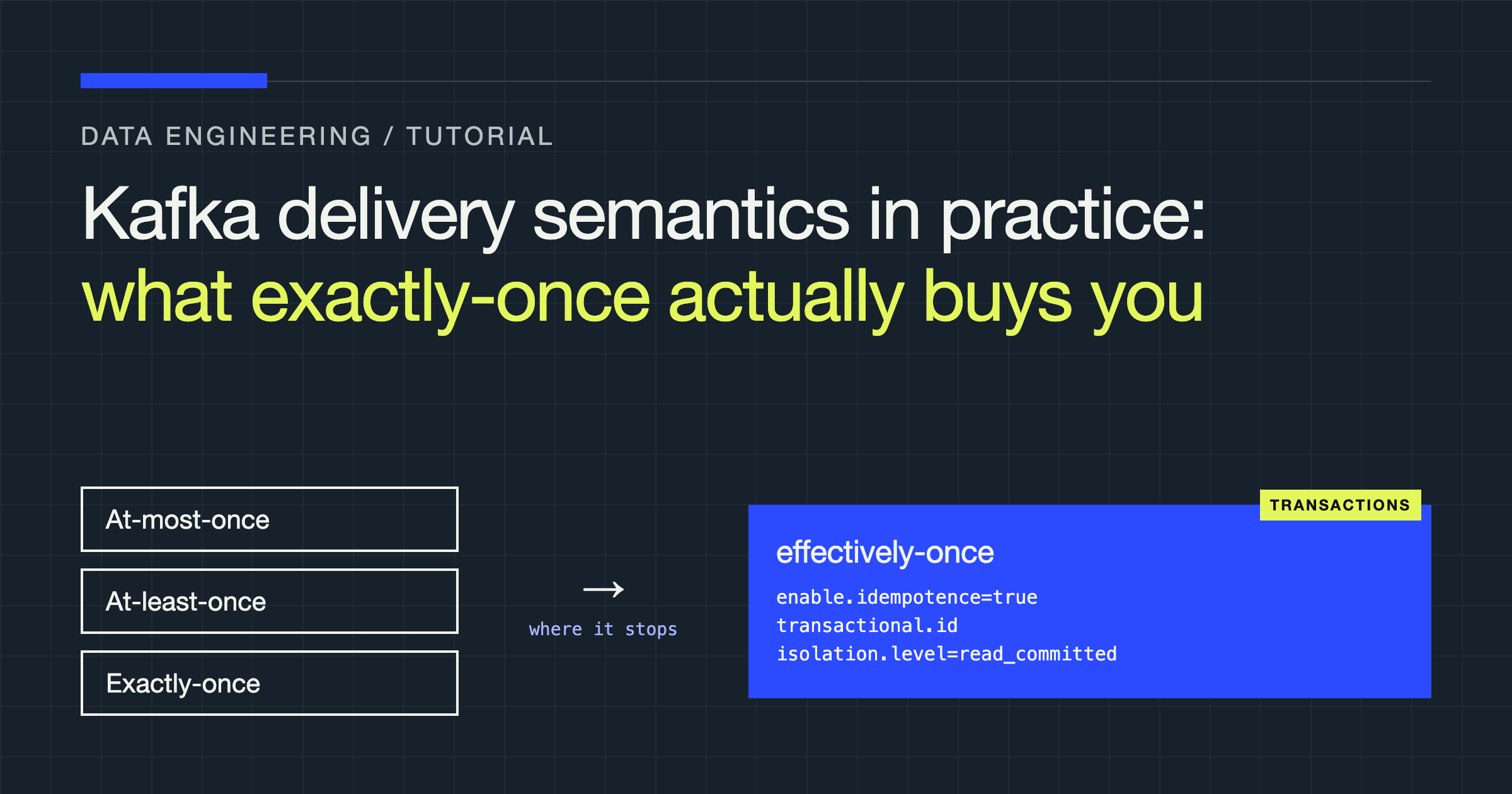
Kafka Delivery Semantics in Practice: What Exactly-Once Actually Buys You
At-most-once, at-least-once, and exactly-once in Kafka, precisely: which configurations deliver which guarantee, where exactly-once stops, and what to build instead.
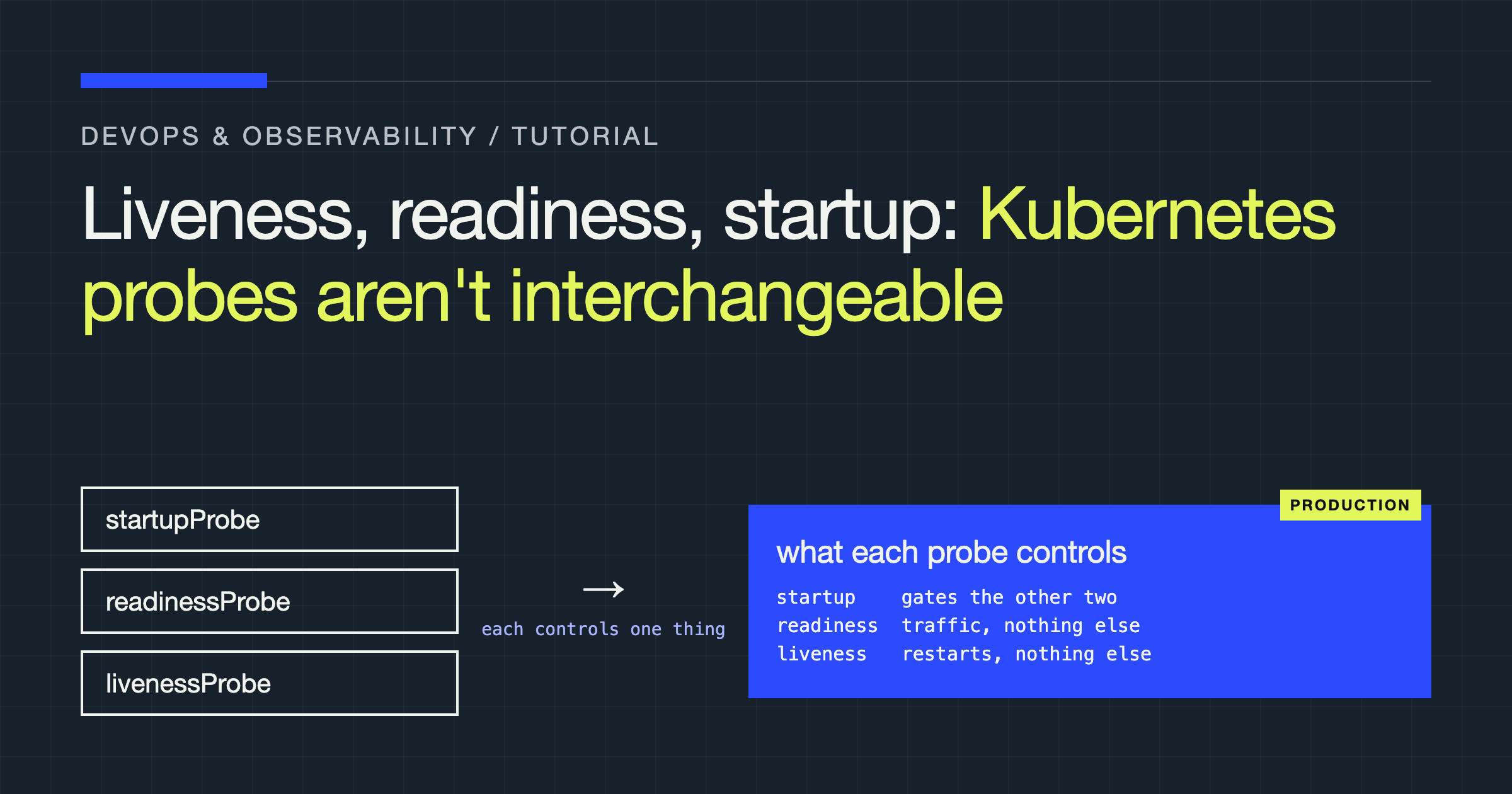
Kubernetes Probes Aren't Interchangeable: Liveness, Readiness, and Startup in Production
Learn what liveness, readiness, and startup probes actually control, how they fail in production, and how to configure all three correctly.
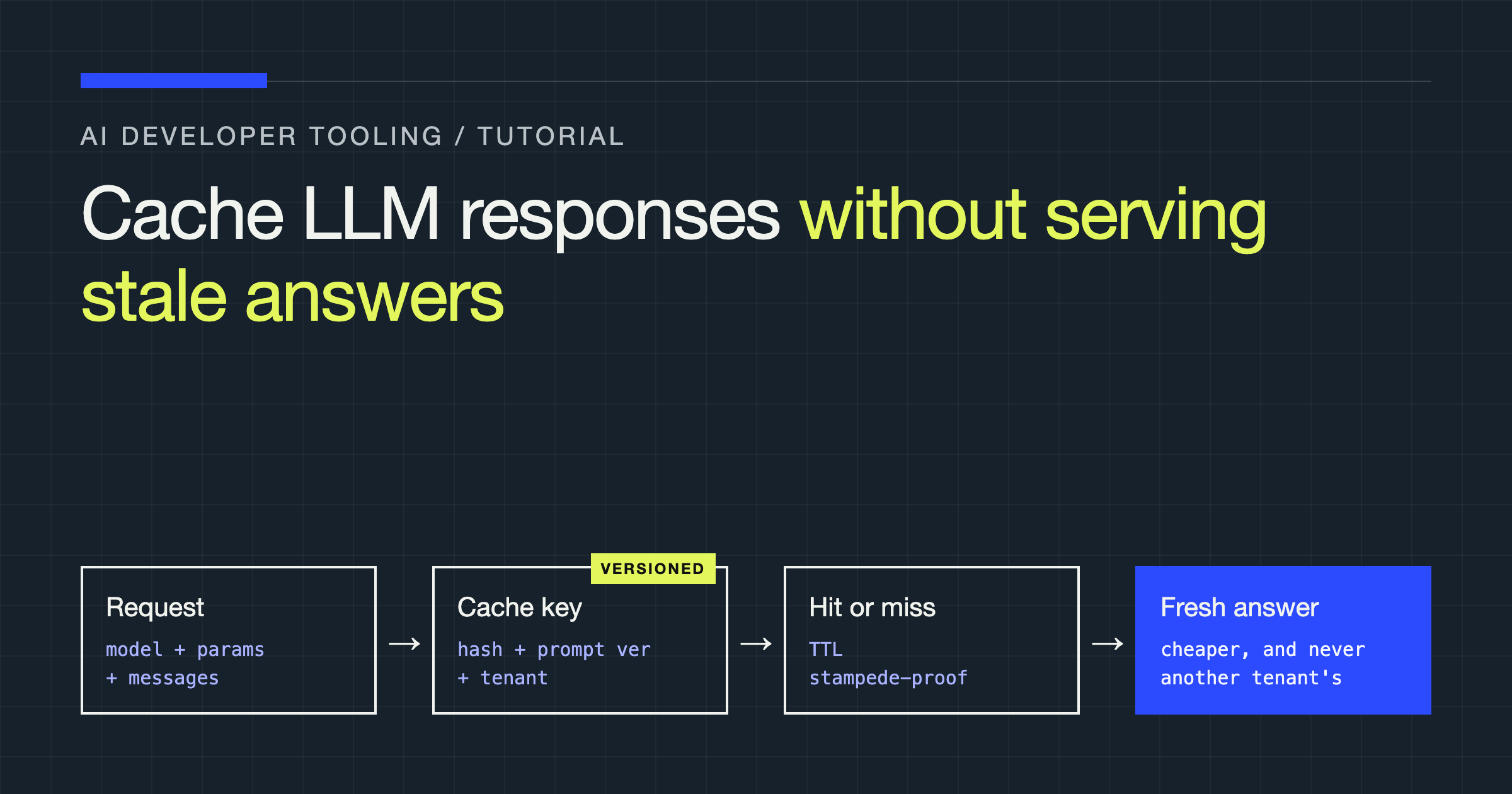
Cache LLM Responses Without Serving Stale Answers
Design an LLM response cache that actually saves money: exact-match keys, versioned prompts, tenant isolation, and the strict rules for when semantic caching is safe.
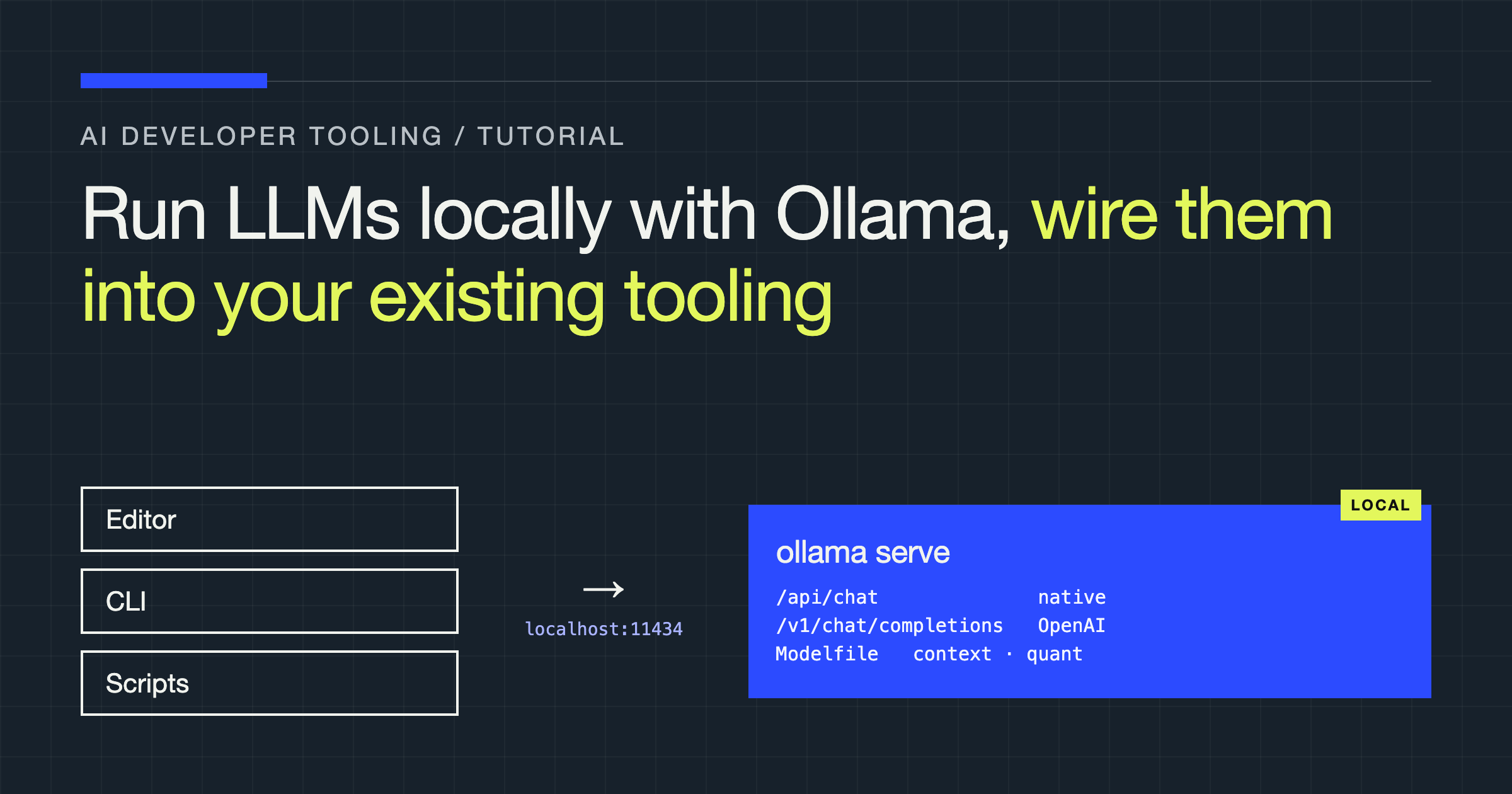
Run LLMs Locally with Ollama and Wire Them into Your Existing Tooling
Install Ollama, serve models over its native and OpenAI-compatible APIs, tune context and quantization, and connect editors, CLIs, and scripts.
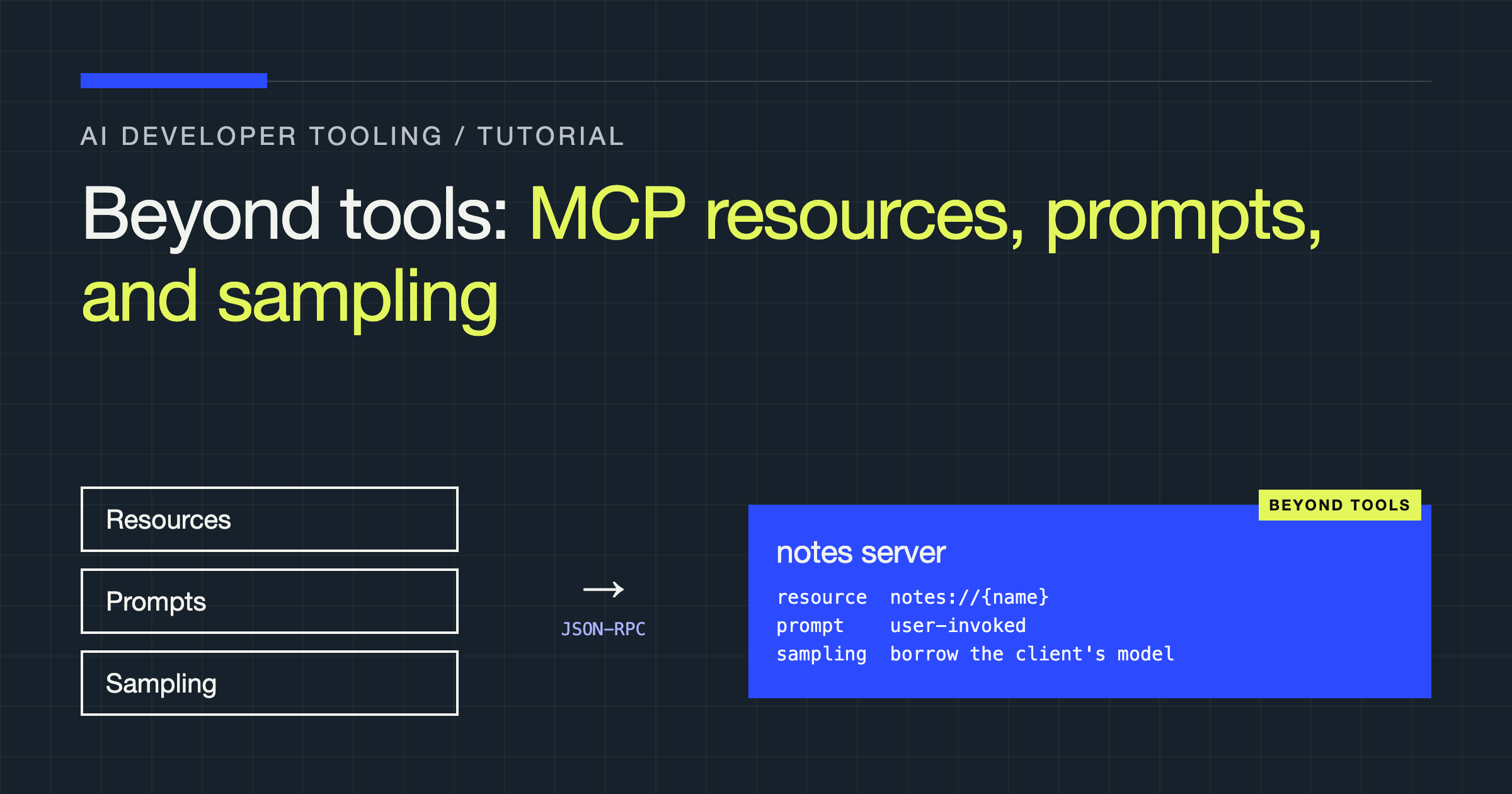
Beyond Tools: MCP Resources, Prompts, and Sampling, Explained by Building
Tools get all the attention, but MCP's resources, prompts, and sampling are what make a server feel native. Build a small server that uses all three.
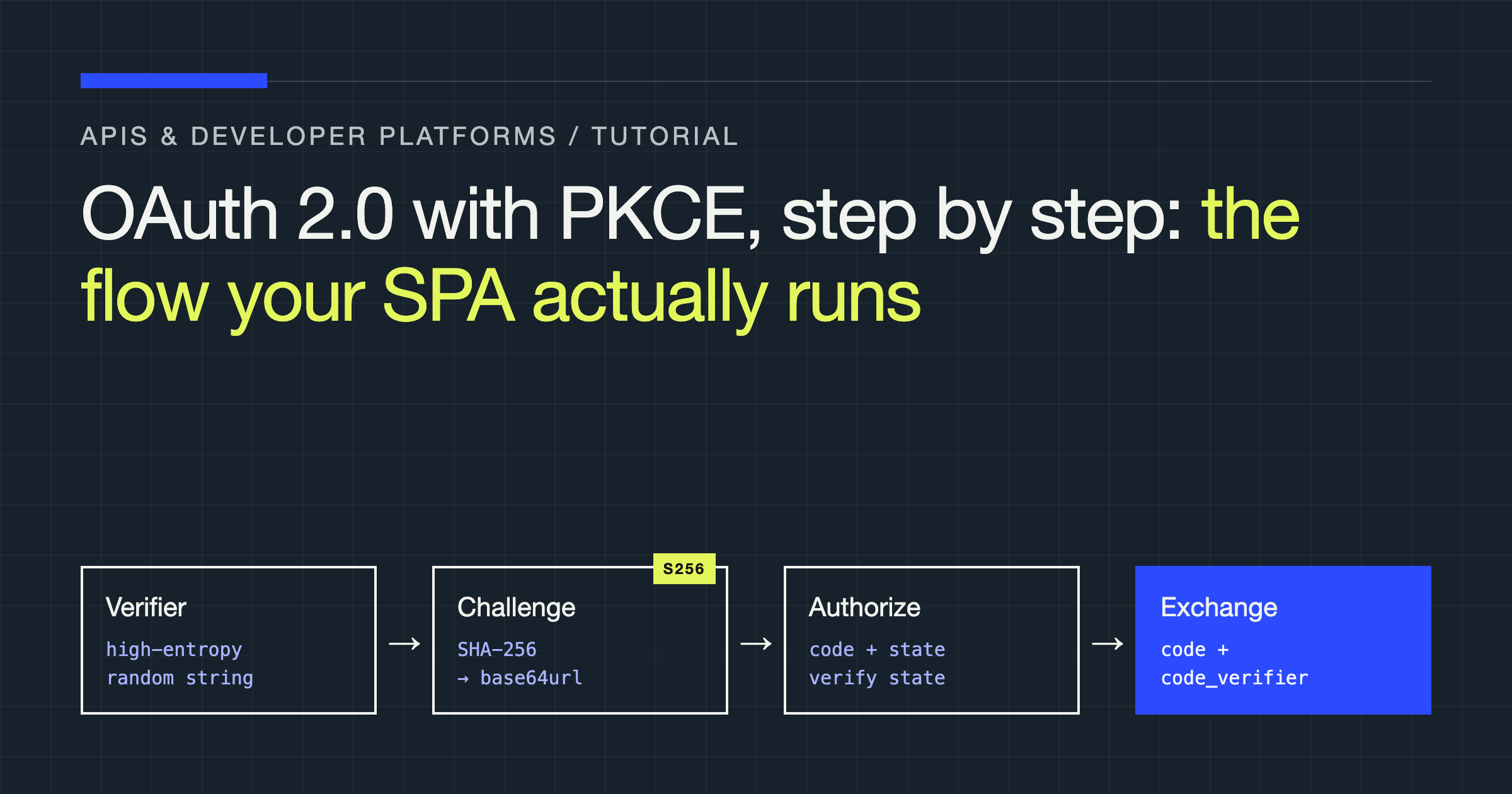
OAuth 2.0 with PKCE, Step by Step: The Flow Your SPA Actually Runs
Walk the authorization code flow with PKCE exactly as a browser app runs it, including the verifier math, state checks, and token storage decisions.
No matches in this set.
Clear a filter or try another combination.